

Does your dog constantly lick or chew their feet? Scratch at their ears? Rub their face along the carpet? Maybe their ears become red, smelly or sore — you treat the ear infection, everything settles down, and then a few weeks or months later it’s back again.
If this sounds familiar, there may be more of a connection between these problems than you realise.
At Dural Veterinary Hospital, itchy skin and recurrent ear problems are some of the most common conditions we see. And while there are many possible causes of itching in dogs, the overwhelming majority of recurrent itchy skin problems we see are caused by environmental allergies, also known as atopy.
What is atopy?
Atopy is an allergic reaction to substances in the environment. These can include things such as:
- Grass and plant pollens
- Trees and weeds
- Dust mites
- Moulds and other environmental allergens
These allergens are very difficult — and usually impossible — to completely avoid.
Dogs with atopy have an abnormal immune response to environmental allergens, together with changes to the normal protective barrier of their skin. The result is inflammation and, most importantly from your dog’s point of view, itch.
Some dogs are affected seasonally, particularly at certain times of the year when particular pollens are abundant. Others have symptoms throughout the year.
And just like people with eczema or hay fever, the severity can vary enormously. One dog may occasionally lick their feet, while another may develop significant ongoing skin and ear disease.
Itchy ears and licking feet — a classic combination
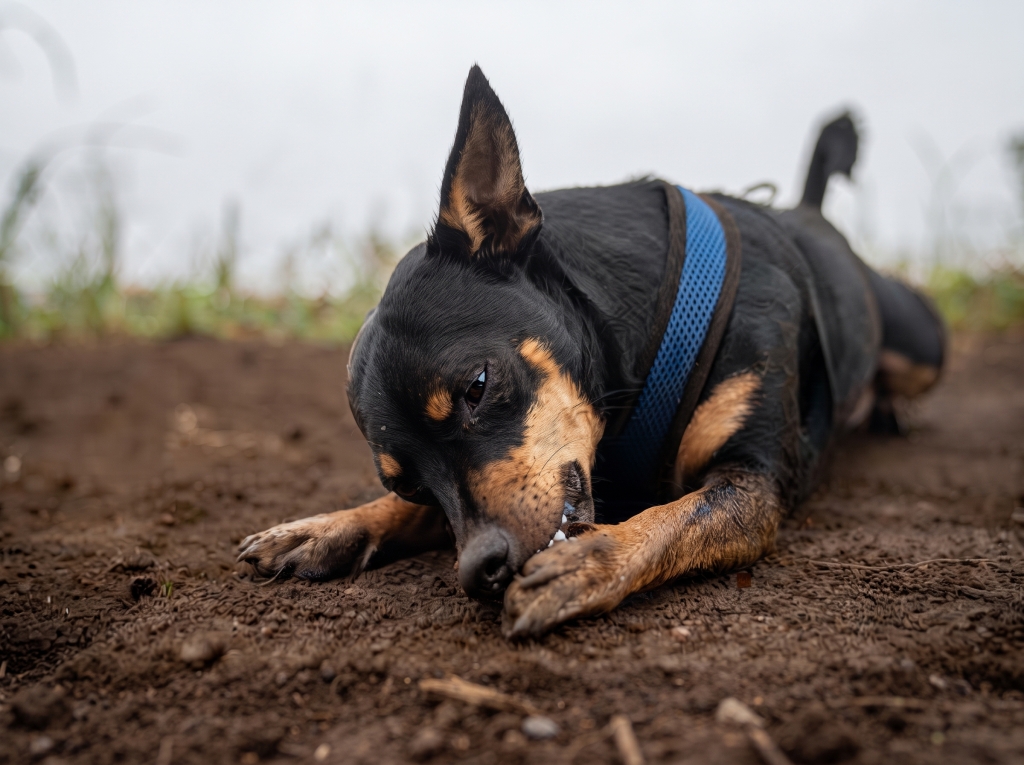
One of the most recognisable patterns of atopy is a dog who licks or chews their feet and has itchy, red or recurrently infected ears.
Owners don’t always realise these problems are connected.
We often hear:
“He’s got another ear infection.”
It’s easy to think of an ear infection as something a dog has “caught”. But dogs with recurrent ear infections usually aren’t repeatedly catching new infections.
The ear canal is lined with skin.
If a dog’s skin is inflamed because of allergy, the skin lining their ears can be inflamed too. This changes the environment within the ear canal and makes it easier for organisms that normally live there to multiply.
So the sore ear may actually be one manifestation of the dog’s underlying allergic skin disease.
But isn't itching usually caused by food?
Food gets blamed for an enormous amount of itchy skin disease in dogs, particularly online.
True food allergy certainly exists, and in the right patient we may recommend a properly conducted elimination diet to investigate it. However, food allergy accounts for less than 5% of the recurrent allergic skin disease we see at Dural Veterinary Hospital.
Environmental allergy is far, far more common.
Simply changing from chicken to beef, switching to a grain-free diet or repeatedly trying different commercial foods is therefore unlikely to solve the problem for most chronically itchy dogs.
What about fleas and mange?
Parasites absolutely can cause itching and historically were a very common cause of skin disease.
They’re also understandably one of the first things owners think of when their dog starts scratching.
Fortunately, with the excellent modern flea and parasite preventatives now available, we see flea-related skin disease and mange much less frequently in our Dural and Hills District patients than we once did.
They still need to be considered — particularly in a dog with an unusual pattern of skin disease or inadequate parasite prevention — but they are not the usual explanation for the recurrent itchy dogs we see every day.
Contact allergies can occur as well, but these are even less common.
Why does an allergic dog suddenly get MUCH itchier?
This is where secondary infection becomes really important.
Allergic skin is inflamed and its normal protective barrier doesn’t work as effectively as it should. This creates an opportunity for bacteria and yeast that normally live harmlessly on the skin and in the ears to overgrow.
The resulting infection adds another layer of inflammation and can dramatically increase the dog’s discomfort.
In other words, infection can turbocharge the itch.
This is one of the most common reasons we see a dog who has previously had only mild itchiness, or has been doing really well on treatments such as Cytopoint or Apoquel, suddenly start really scratching, licking or getting sore ears.
It doesn’t necessarily mean their allergy medication has suddenly stopped working.
They may now have a secondary bacterial or yeast infection that needs to be treated as well.
How do we know if there is an infection?
Looking at an itchy patch of skin or a red ear can give us clues, but it can’t reliably tell us exactly what is happening.
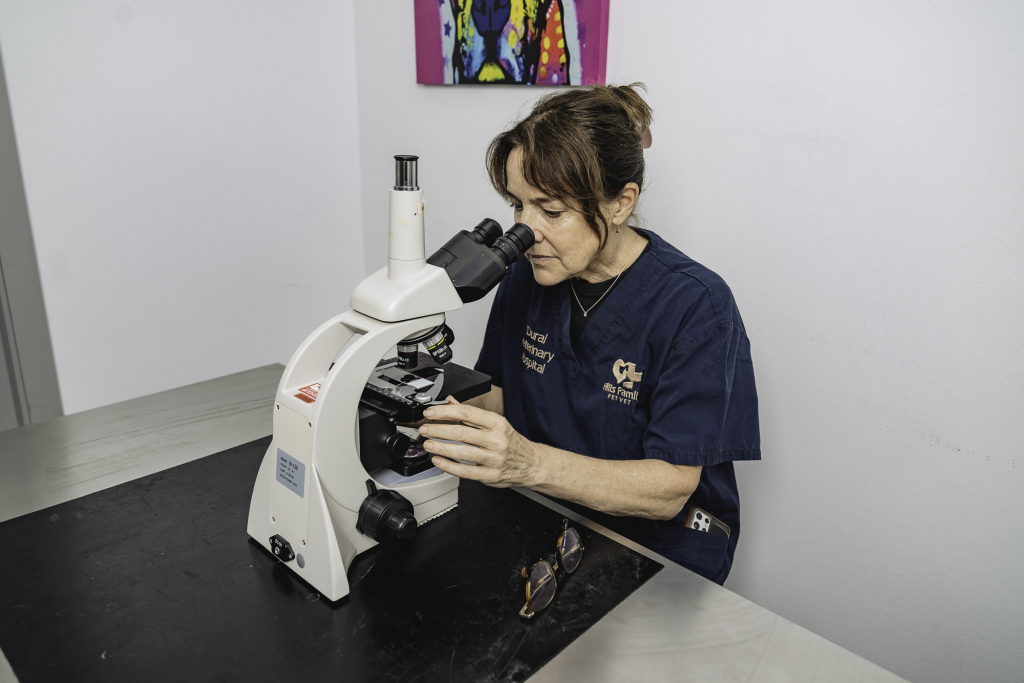
That’s why we often recommend cytology.
Cytology is a simple test we can perform in the hospital. We collect a small sample from the affected skin or ear, prepare it on a microscope slide and examine it under the microscope.
This allows us to look for things such as:
- Bacteria
- Yeast
- Inflammatory cells
Rather than guessing whether an infection is present, cytology gives us much more useful information about what is actually happening on your pet’s skin or in their ears.
That information helps us decide whether an infection is present, what type of infection we’re dealing with, and prescribe the treatment most likely to give effective, long-lasting relief.
Cytology can also be useful during follow-up appointments to make sure an infection has properly resolved, particularly in dogs with recurrent problems.
Why not just treat the infection?
Because if the infection is secondary to allergy, treating the infection alone doesn’t address the reason it developed in the first place.
The ear may get better. The skin may settle down. Your dog stops scratching.
Then a few weeks or months later, you’re back again.
For dogs with recurrent allergic skin disease, our goal is therefore not simply to treat each infection as it appears. We want to control the underlying allergy as well as treating secondary problems when they occur.
Can skin allergies be cured?
Usually, no — but they can generally be managed very effectively.
We often compare atopy in dogs with eczema in people. There isn’t usually a single treatment that permanently removes the underlying tendency towards allergy.
Instead, good allergy management means working out what keeps that particular dog comfortable.
During a flare-up, our immediate priorities are to control the inflammation and itch, identify and treat any secondary infection, and get the dog comfortable again.
Once things have settled, we work with owners to develop an individualised, long-term and sustainable management plan.
Depending on the dog, that may include treatments such as Cytopoint or Apoquel, medicated shampoos or other topical therapies, management of secondary infections, allergen-specific immunotherapy and other supportive measures.
Some dogs need treatment throughout the year. Others need more help during their particular allergy season.
There isn’t one perfect allergy plan for every dog.
The best plan is one that keeps your dog comfortable and is practical for your family to maintain long term.
Is your dog trying to tell you they're itchy?
Sometimes the signs are obvious. Other dogs don’t spend all day scratching.
Watch for:
- Licking or chewing the feet
- Red or stained paws
- Scratching or rubbing the ears
- Repeated head shaking
- Red, smelly or sore ears
- Rubbing the face
- Licking or chewing other areas of the body
- Red or inflamed skin
- Recurrent skin or ear infections
If you’re recognising your own dog in that list — particularly the itchy ears + licking feet combination — it’s worth looking at the bigger picture rather than simply treating each flare-up in isolation.
If your dog is licking their feet, scratching, shaking their head or seems to have yet another “ear infection”, we’d be happy to help work out what’s going on — and, importantly, develop a plan to keep them comfortable in the longer term.
Call Dural Veterinary Hospital on 9651 1100 or book an appointment online.