Who owns your vet? What does ‘independently owned’ mean and why does it matter for pet owners?
When you choose a veterinary hospital, you probably think about things like location, opening hours, recommendations from friends and, most importantly, who will be looking after your pet.
But have you ever wondered who actually owns the veterinary hospital?
It’s something many pet owners don’t think about, and understandably so. After all, it’s the vets and nurses you see when you visit, not the business owners behind the scenes.
But ownership can influence how a veterinary hospital operates, and it’s worth understanding what that means.
The changing face of veterinary ownership in the Hills District
Traditionally, most veterinary hospitals in Australia were owned by the veterinarians who worked in them.
Almost all of the long-established veterinary practices in the Hills District were started from scratch by passionate vets who spent their careers looking after the animals in our community.
As the Hills District population exploded in the 1970s and 80s, Dr Gordon Heslop established Winston Hills and Glenhaven Vets, Dr Richard Naylor started Castle Hill Veterinary Hospital, Dr Lindsay Hay opened Baulkham Hills Veterinary Hospital and Dr Rob Zammit established Vineyard Veterinary Hospital. Dural Veterinary Hospital was founded by Dr Barry Larkin in 1972.
For many long-term Hills District residents, these veterinarians were household names. Their hospitals became trusted local institutions, with generations of families bringing their pets to the same practice.
But veterinary practice ownership has changed enormously in recent years.
All of these original veterinarians have now retired or are easing back, and ownership of almost all of these practices has passed to large corporate veterinary groups.
While the familiar names remain on the buildings, these hospitals are now owned by larger veterinary companies such as VetPartners and Vet Central. Many pet owners may not even realise that anything has changed.
Dural Veterinary Hospital is now the only one of these long-standing, foundational Hills District veterinary practices that remains independently owned.
When Dr Barry Larkin retired after more than 40 years at Dural Veterinary Hospital, it was important to him that the practice remained independently owned. Perhaps that had something to do with his well-known healthy disregard for authority! After all, this was the man who, as a veterinary student in 1956, pulled off the infamous fake Olympic torch prank.
My family and I have owned the practice since 2018, and I’m proud to continue the legacy of independent, patient-focused care that Barry devoted so much of his life to.
Veterinary ownership is changing around the world
Corporate ownership of veterinary practices in the UK and US is a few years ahead of Australia.
In the UK, more than 60% of veterinary practices are now owned, wholly or partly, by just six large veterinary groups. In 2013, that figure was only around 10%.
Australia is following a similar path, although corporate ownership is still considerably lower at present. Industry estimates suggest that around one in five Australian veterinary practices are now corporately owned.
What has happened in the UK?
In 2023, the UK’s Competition and Markets Authority (CMA) began a major investigation into the veterinary industry, prompted by concerns about rising prices, competition and transparency.
The investigation was completed in March 2026 and found that many pet owners didn’t know their veterinary hospital was part of a corporate group, making it difficult to compare services and prices between businesses that appeared to be independent competitors.
There were also concerns about the cost of medications, the information provided to clients before treatment and the potential for commercial pressures to influence veterinary decisions.
The investigation did not conclude that corporate veterinary hospitals provide poorer medical care, but it did identify significant problems with how the veterinary market was working for pet owners.
As a result, new rules are being introduced in the UK requiring veterinary businesses to be more transparent about their ownership, publish prices for common services and provide clearer treatment estimates.
You can read more about the investigation on the UK Government’s website.
What's happening right now in NSW?
Here in NSW, the State Government is proposing significant changes to the laws governing veterinary practices.
Under the existing legislation, veterinary businesses must have a degree of veterinary involvement in their ownership or control.
The proposed Veterinary Services Bill 2026 would remove this requirement, allowing veterinary hospitals to be owned and controlled entirely by people or companies who are not veterinarians.
The Bill passed the NSW Legislative Assembly in October 2026 and is now being considered by the Legislative Council.
Many in the veterinary profession, including us, are concerned that removing veterinary involvement in business ownership could increase commercial pressures on the profession, particularly as corporate ownership continues to grow.
You can follow the legislation on the NSW Parliament website and contact your local Member of Parliament if you’d like to express your views.
Why does independent ownership matter for pet owners in Dural?
There are excellent, dedicated vets and nurses working in both independently owned and corporate veterinary hospitals. The difference isn’t necessarily in the people providing the care, but in who makes the decisions about how the hospital operates.
At Dural Veterinary Hospital, I work alongside our veterinary and nursing team every week, and decisions are made as a team. We don’t have a corporate head office setting our budgets, determining our appointment lengths or deciding which services we should offer.
Every veterinary hospital needs to be financially sustainable, but being independent gives us the freedom to decide how we balance business realities with the care we want to provide.
For us, that means:
More time with our patients. We choose to offer 30-minute consultations because we believe having time to listen, examine your pet properly and explain treatment options makes a difference, even if it isn’t the most ‘efficient’ way to run an appointment book.
Decisions made right here. When we identify a need for new equipment, medications or additional services, we can make those decisions ourselves without needing approval from head office.
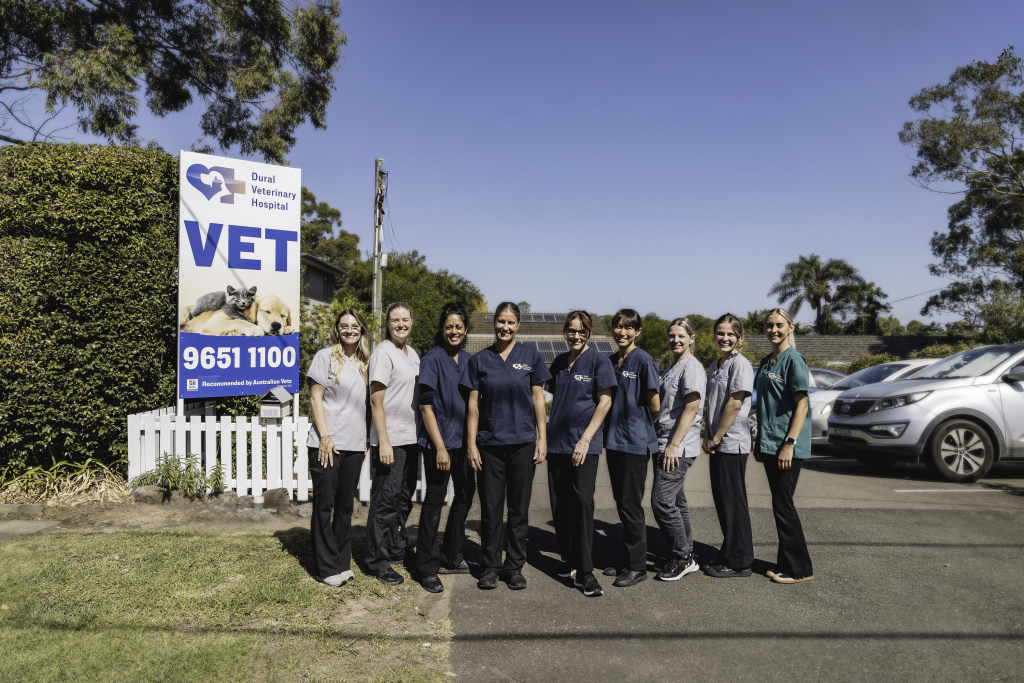
A team you know and trust. We choose the vets and nurses who join us and work hard to create an environment where they feel supported, appreciated and want to stay. Karissa Symons, our lovely head nurse, worked alongside Barry for many years and is still with us today. Kate Teakle and Dr Eleanor Tuffley have both been at Dural for well over 10 years, and our team is made up of permanent, long-term staff. Having familiar faces who know you, your pets and their medical history makes a real difference.
Being part of our community
We’re a local business and part of the Hills District community. We live here, our kids go to school and play sport with your kids and grandkids, and we support other locally owned businesses.
When you support an independent business, you’re supporting local families, local jobs and people who are personally invested in the community around them.
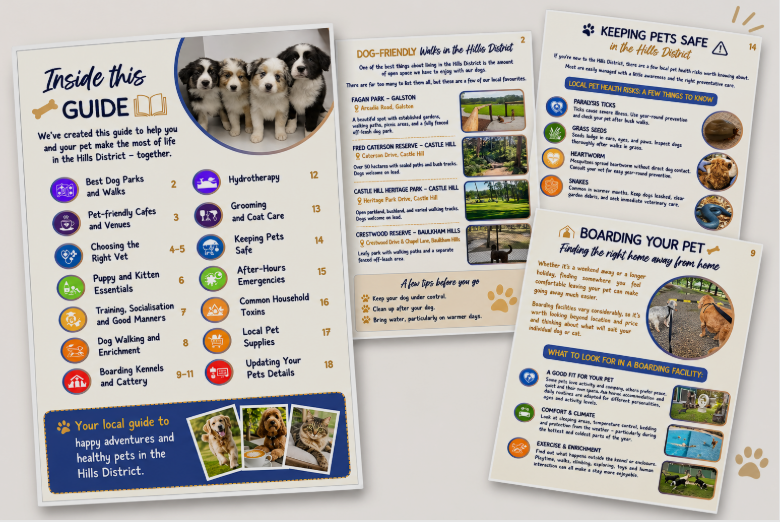
That’s one of the reasons we recently created our Hills District Pet Owner’s Guide.
Corporatisation isn’t unique to veterinary hospitals. Pet shops, boarding kennels and pet groomers are also operating in an environment increasingly dominated by large national and multinational companies.
Along with useful local information for pet owners, our guide showcases some of the fantastic independent businesses in our area — places we’ve visited ourselves and trust with our own pets.
You can pick up a free copy from the hospital or download it from our website.
Thank you for supporting our independent hospital
Ultimately, the most important thing is finding a veterinary hospital where you and your pet feel comfortable, listened to and well cared for.
There are wonderful veterinarians and nurses working in hospitals of every ownership structure. But we believe pet owners deserve to know who owns the businesses they support and who is making the decisions behind the scenes.
Dural Veterinary Hospital has been providing compassionate, high-quality, independent veterinary care for pets and their owners in Dural, Glenhaven, Castle Hill and the wider Hills District since 1972.
We’re grateful to every client who chooses to bring their pets to us. Your support allows us to keep doing what we love, investing in our team and providing a service we’re really proud of.
Thank you for being part of the Dural Vet family.
Dr Donna McGrath and the Dural Veterinary Hospital Team